
Are wall cracks a dealbreaker when buying a house in NZ?

Usually not, but it depends on the type. Hairline cracks in plasterboard joints and around windows are normal movement and a cosmetic fix. Diagonal cracks that widen at one end, cracks that match up inside and out, doors that no longer close and sloping floors together point to foundation or pile movement, and that needs a builder or engineer's opinion before you go unconditional. A building inspection tells you which kind you are looking at.
Cracks are the first thing most buyers notice at an open home and the first thing they ask me about. Most of the time they are nothing. Sometimes they are the only visible sign of something expensive. The trick is knowing which is which, and you usually cannot tell from the crack alone.
The cracks that are normal
Houses move. Timber framing dries and swells with the seasons, plasterboard sheets meet at joints, and paint is brittle. Hairline cracks along plasterboard joints, above door frames and around window corners are ordinary movement. They are a cosmetic fix, a bit of filler and paint, and I grade them green.
The cracks worth a second look
On a recent Hamilton inspection the owners pointed out cracks where the walls met the ceiling. From the room they looked minor. In the roof space the story was different. The timber framing above had deformed and pulled away, and that movement was what had opened the cracks below. Nobody would have seen it without getting up into the ceiling.
That is the pattern to watch for. The crack itself is rarely the problem. It is what is moving behind it. Framing that has aged and lost its strength, poor original construction, or a foundation that has settled unevenly will all show up first as cracking in the rooms below.
Signs that point at the foundation
- Diagonal cracks that are wider at one end than the other
- Cracks that line up inside and outside on the same wall
- Doors and windows that have started to stick or no longer close square
- Floors that slope, or gaps opening between the floor and the skirting
- Stepped cracks following the mortar lines in brick
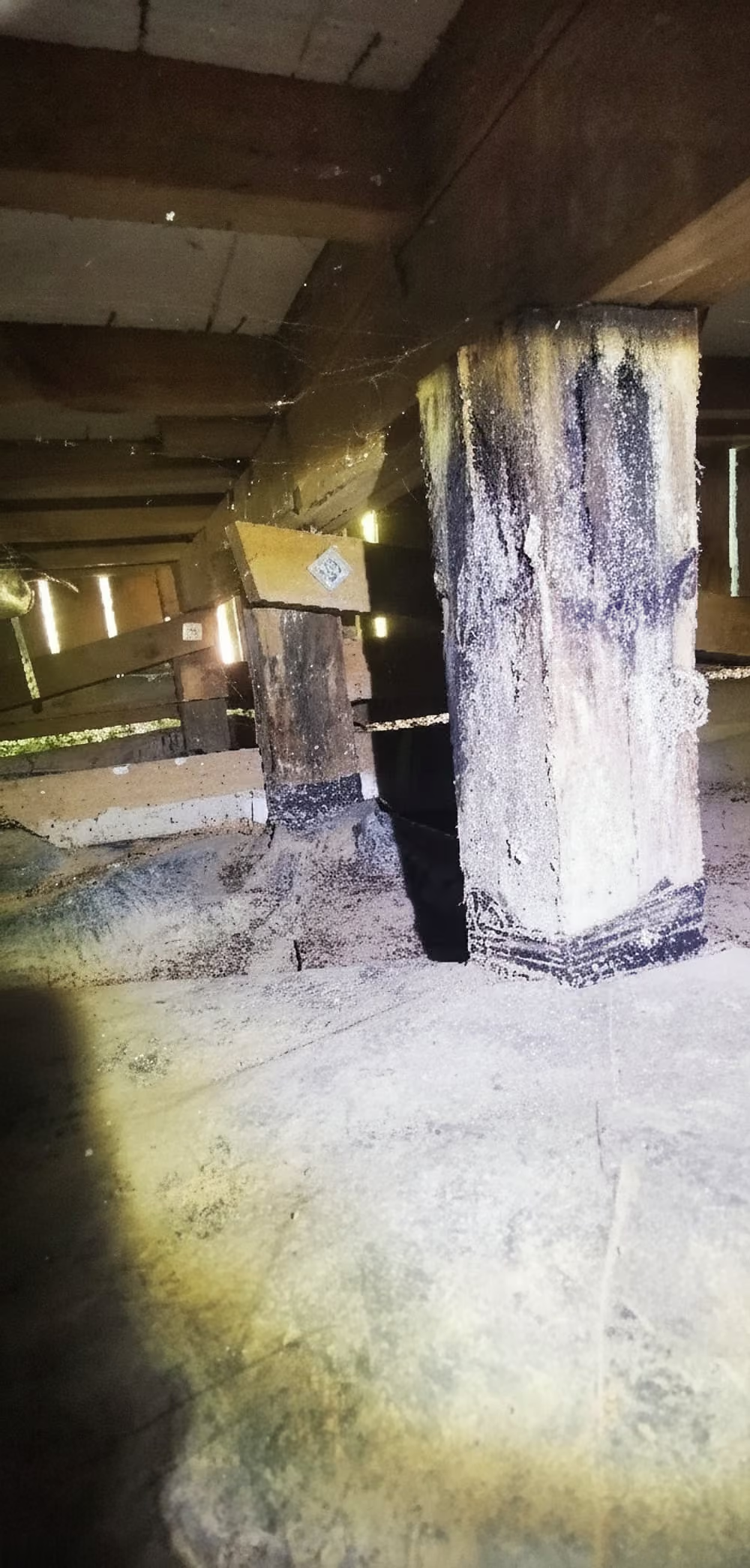
Any two of those together and I want to see the subfloor and the roof space before anyone goes unconditional. Piles that have moved, bearers packed with loose shims, or framing that has deformed all leave the same fingerprints upstairs.
What an inspection actually does with a crack
I photograph it, measure it if it is wide enough to matter, then go looking for the cause. That means the roof space above it and the subfloor below it, with moisture readings if there is any chance water is involved. In the report each finding gets a grade. Green is cosmetic. Orange means monitor or get a quote. Red means get a builder or an engineer to look at it before you commit.
So, dealbreaker or not?
Usually not. Even foundation movement is often repairable, and knowing about it before you sign means you can price it into the offer or ask the vendor to fix it. What you want to avoid is finding out after settlement. A pre-purchase inspection to NZS 4306:2005 is the cheapest way to turn a crack from a worry into a number.
Questions that go with this guide
If yours isn't here, call 022 309 8813 and ask us.
They go in the report with photos and a grade, and your inspector explains what they mean on the phone. You can then renegotiate the price, ask the vendor to fix them, get a specialist quote, or walk away. Most issues are maintenance rather than dealbreakers, and the report helps you tell the difference.
No. A building inspection is not a pass or fail test, it is a condition report. Every house has something in it, and the report grades each finding so you can decide what matters to you, what to negotiate on, and what you are happy to live with.
Yes, and it is a good idea. Come for the last half hour and your inspector will walk you round the main findings while you are standing in front of them. If you cannot make it, the phone walkthrough after the report covers the same ground.
More guides
Plain answers to the questions we get asked most on site.
Leaky home warning signs: what to look for before you buy
How long does a roof last in NZ? Lifespan by roof type
Are wall cracks a dealbreaker when buying a house in NZ?